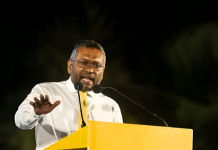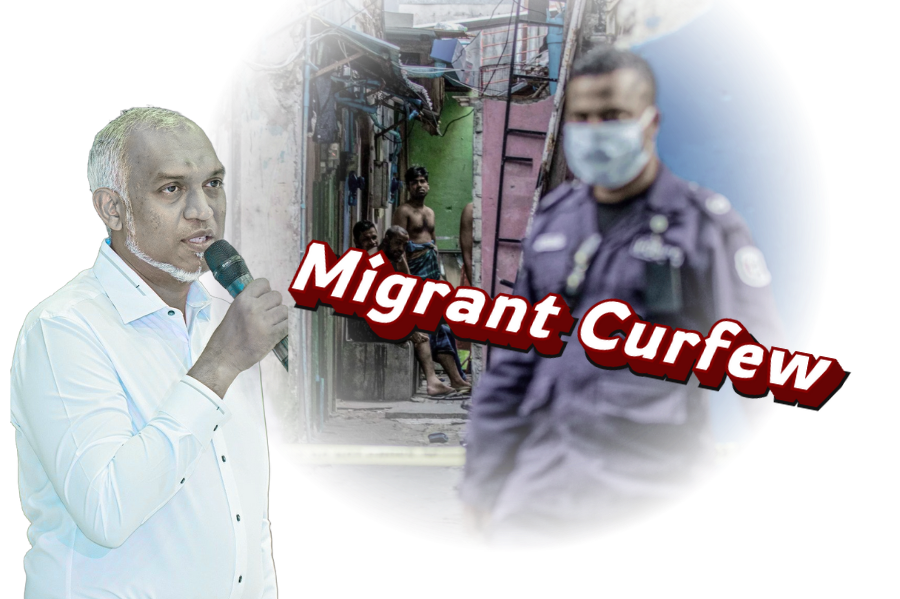
President Mohamed Muizzu’s decision to target migrant workers out on the streets after midnight is not about public safety. It is about power, control, and fear. By ordering police to stop, question, and search migrants simply for being outside after 12 a.m., the government has crossed a dangerous line.
This policy treats an entire community as suspects based on nationality. That is not law and order. That is discrimination.
The government claims the curfew is meant to protect “social norms.” But what social norm is protected by singling out migrant workers? What public order is served by telling one group of people that their freedom ends at midnight?
The Maldivian Constitution guarantees freedom of movement. International law, including the ICCPR, clearly forbids discrimination based on nationality. Muizzu’s instructions violate both. No amount of patriotic language can hide that fact.
Migrant workers already live in fear—fear of deportation, fear of abuse, fear of silence. They build our homes, clean our resorts, and keep the economy running, yet this government chooses to police their presence instead of protecting their rights.
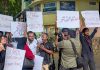
The backlash has been loud and justified. Political leaders, union representatives, journalists, and former ministers have all warned that this move is illegal, unconstitutional, and deeply xenophobic. Some have rightly pointed out that today it is migrants—tomorrow it could be anyone.
History shows where this road leads. From Europe’s failed migrant crackdowns to the UK’s “hostile environment” scandal, targeting communities based on identity never improves safety. It only spreads fear, injustice, and abuse of power.
Even more telling is how the police handled the announcement—briefly sharing it in English, then quickly deleting it and reposting only in Dhivehi. That alone speaks volumes. This is a policy the government knows cannot stand international scrutiny.
Muizzu was elected on promises of dignity, sovereignty, and fairness. This curfew delivers none of that. Instead, it pushes the Maldives closer to a police state where rights are conditional and fear is policy.
This decision must be reversed. Because when a government starts deciding who deserves freedom based on where they come from, democracy itself is at risk.