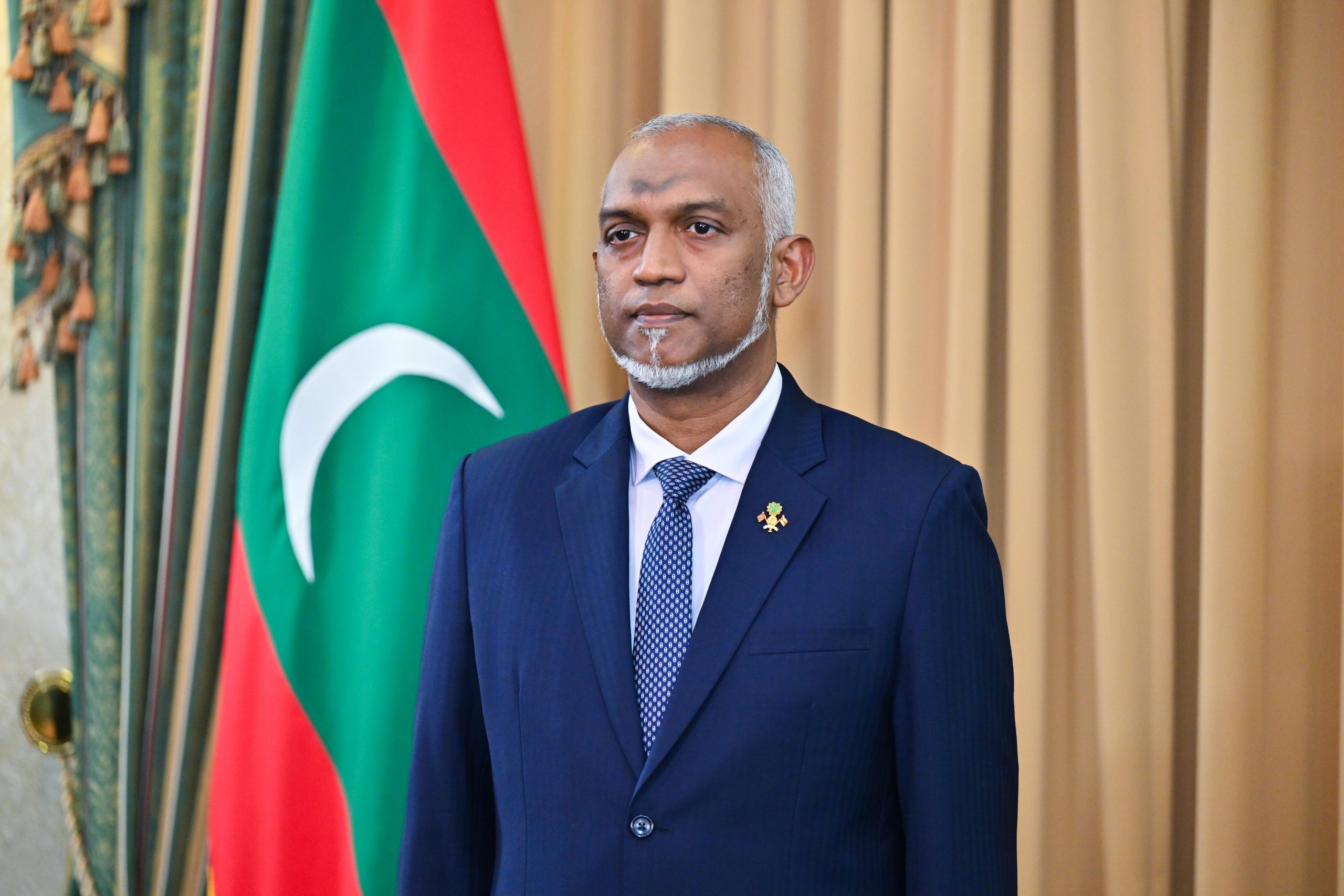
It is difficult to describe 2025 as anything other than a year of deep national disappointment. President Mohamed Muizzu entered the year promising economic revival, sovereignty, and stability. What the country experienced instead was a steady concentration of power, the weakening of democratic institutions, and a rapidly deteriorating economic outlook that left ordinary citizens anxious and angry.
With a parliamentary supermajority firmly behind him, Muizzu had an opportunity to govern decisively and responsibly. Instead, that dominance was repeatedly used to undermine checks and balances. By the end of the year, the Maldives was more polarised, more financially vulnerable, and more institutionally fragile than it had been at the start.
The clearest signal of this shift came in May, when Muizzu’s ruling coalition impeached two Supreme Court justices, including Dr. Azmiralda Zahir. The charges were widely seen as politically motivated, and human rights organisations did not mince words in condemning the move. From within the country, the impact was immediate and chilling. Court proceedings stalled, constitutional oversight was paralysed, and the judiciary — once a crucial, if imperfect, counterweight to executive power — was effectively neutralised. The message sent to state institutions was unmistakable: independence would come at a cost.
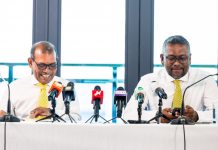
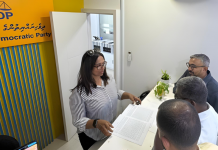
This erosion of accountability was mirrored in the government’s handling of corruption allegations. Muizzu campaigned on a promise of zero tolerance, yet his administration soon became mired in scandals. Leaked documents and investigative reporting pointed to fraudulent land allocations, misuse of welfare funds, and manipulation of party membership records. Instead of opening the door to transparent investigations, the president dismissed these revelations as opposition propaganda. Even during a marathon press conference, he avoided providing clear answers. For many Maldivians, this gap between rhetoric and reality confirmed a growing suspicion that impunity had simply changed hands.
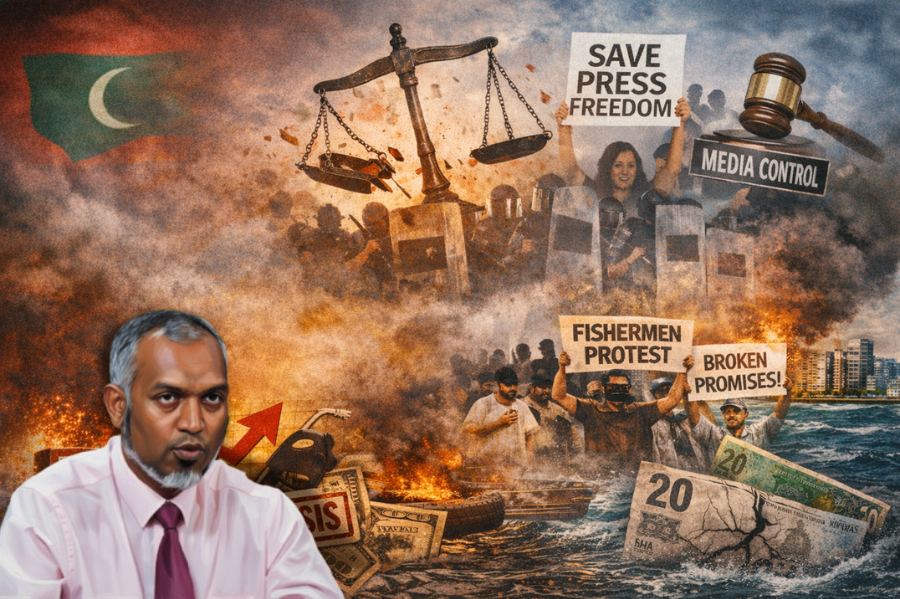
The space for scrutiny narrowed further in September, when Muizzu ratified the Maldives Media and Broadcasting Regulation Bill. From the newsroom, the implications were unmistakable. Independent oversight bodies were dismantled and replaced with a government-dominated commission armed with powers to fine, suspend, or shut down media outlets. International watchdogs described the law as a direct attack on press freedom, and journalists on the ground felt the pressure almost immediately. Vague references to “national security” and “disinformation” became tools of intimidation. Protests erupted, but the government pushed ahead regardless, signalling an increasing intolerance for criticism.
All of this unfolded against the backdrop of a worsening economic crisis. By every credible measure, the Maldivian economy deteriorated in 2025. International credit ratings hovered at near-default levels, with Fitch maintaining a ‘CC’ rating and Moody’s holding the Maldives at Caa2. Debt repayments of up to $700 million loomed during the year, with more than $1 billion due in 2026. Despite healthy tourism arrivals, foreign reserves remained dangerously low.
On the streets and in the islands, the consequences were felt daily. A chronic dollar shortage pushed black market exchange rates as high as MVR 20.50, driving up the cost of food, fuel, and essential imports. Inflation squeezed households already struggling with stagnant incomes. This was not a crisis caused by lack of revenue, but by poor management, delayed reforms, and misplaced priorities.
Public anger eventually spilled into the open. In December, hundreds of fishermen gathered in Malé, protesting broken promises that had once been central to Muizzu’s campaign — guaranteed minimum prices and state purchases of tuna through MIFCO. Instead of solutions, they were met with police raids, arrests, and vessel detentions, including that of an opposition MP. For many observers, this was emblematic of a broader pattern: vital economic sectors were being neglected while political control was tightened from the centre.
Perhaps the most galling contradiction of the year was the government’s spending behaviour. While citizens were repeatedly told to tighten their belts, Muizzu expanded political appointments far beyond his own promised cap. By mid-year, the number had ballooned to near about 5000 , costing millions of rufiyaa each month. Diplomatic missions were bloated with loyalists, and foreign travel continued unabated. Fiscal discipline was preached loudly — but practised selectively, if at all.
As 2025 draws to a close, the Maldives finds itself on a dangerous trajectory. Institutions designed to safeguard democracy have been weakened, the media operates under mounting pressure, debt continues to pile up, and public trust has eroded at an alarming pace. President Muizzu promised change. What he delivered instead was control, contradiction, and crisis.
Unless this course is urgently corrected, the price will not be paid by politicians, but by ordinary Maldivians — in their livelihoods, their freedoms, and the future of their democracy.