An international report has confirmed that corruption money moves easily in the Maldives and that those involved almost never face serious consequences.
The Asia/Pacific Group on Money Laundering (APG), in its 2025 Mutual Evaluation Report, says corruption and bribery are among the biggest sources of illegal money in the country. Yet the report finds that Maldivian authorities are failing to properly investigate these crimes or take back stolen money.
According to the report, people in powerful political positions are often involved in corruption-related financial activity. Instead of keeping illegal money in their own names, they move it through family members, close associates, or private companies. Banks have reported these suspicious transactions to the authorities, but very few cases move forward to prosecution.
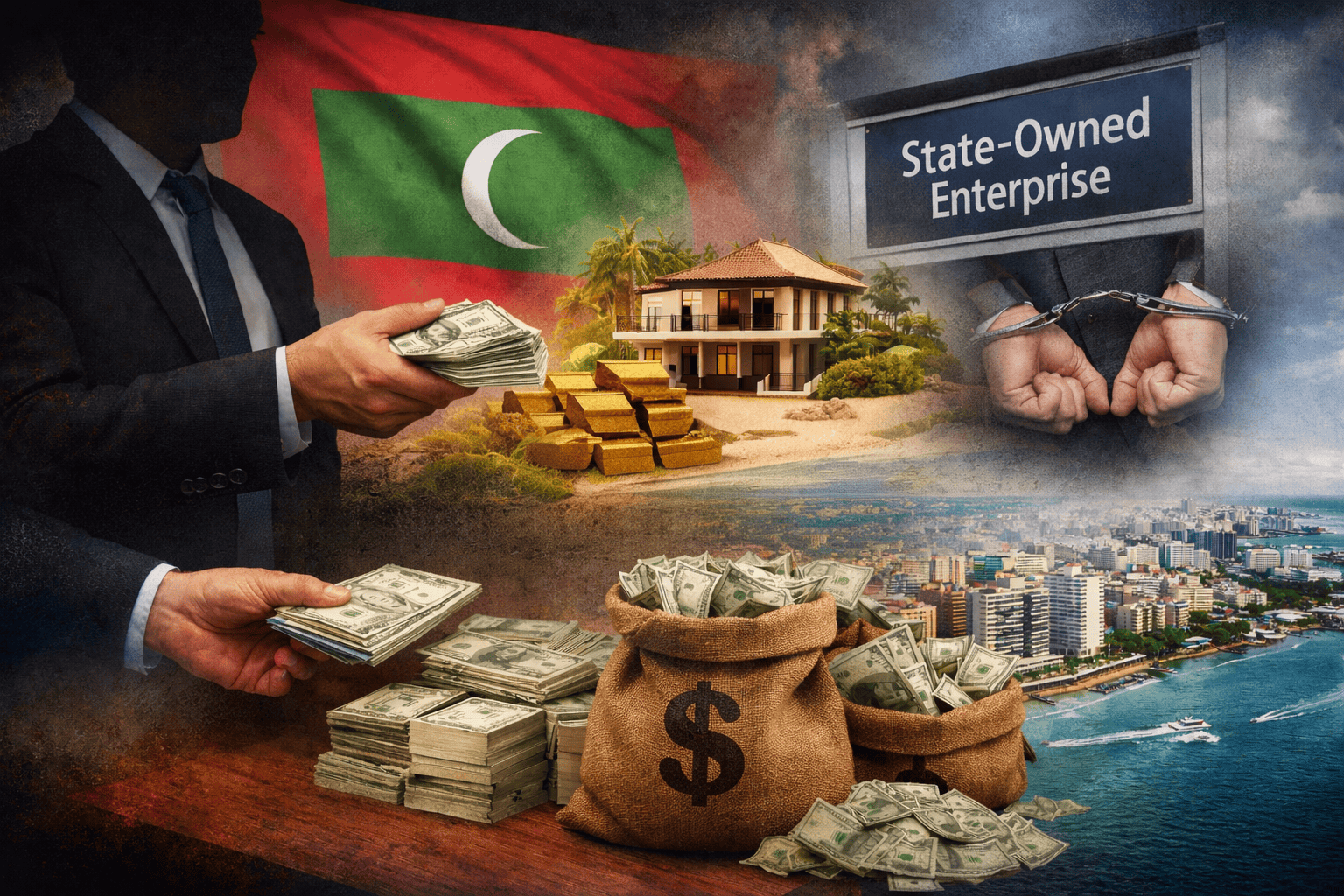
The report also raises serious concerns about government-owned companies. These companies handle large public contracts, and corruption often takes place through inflated costs, weak oversight, and political influence. Public money paid through these contracts is not properly tracked, allowing it to quietly turn into private wealth.
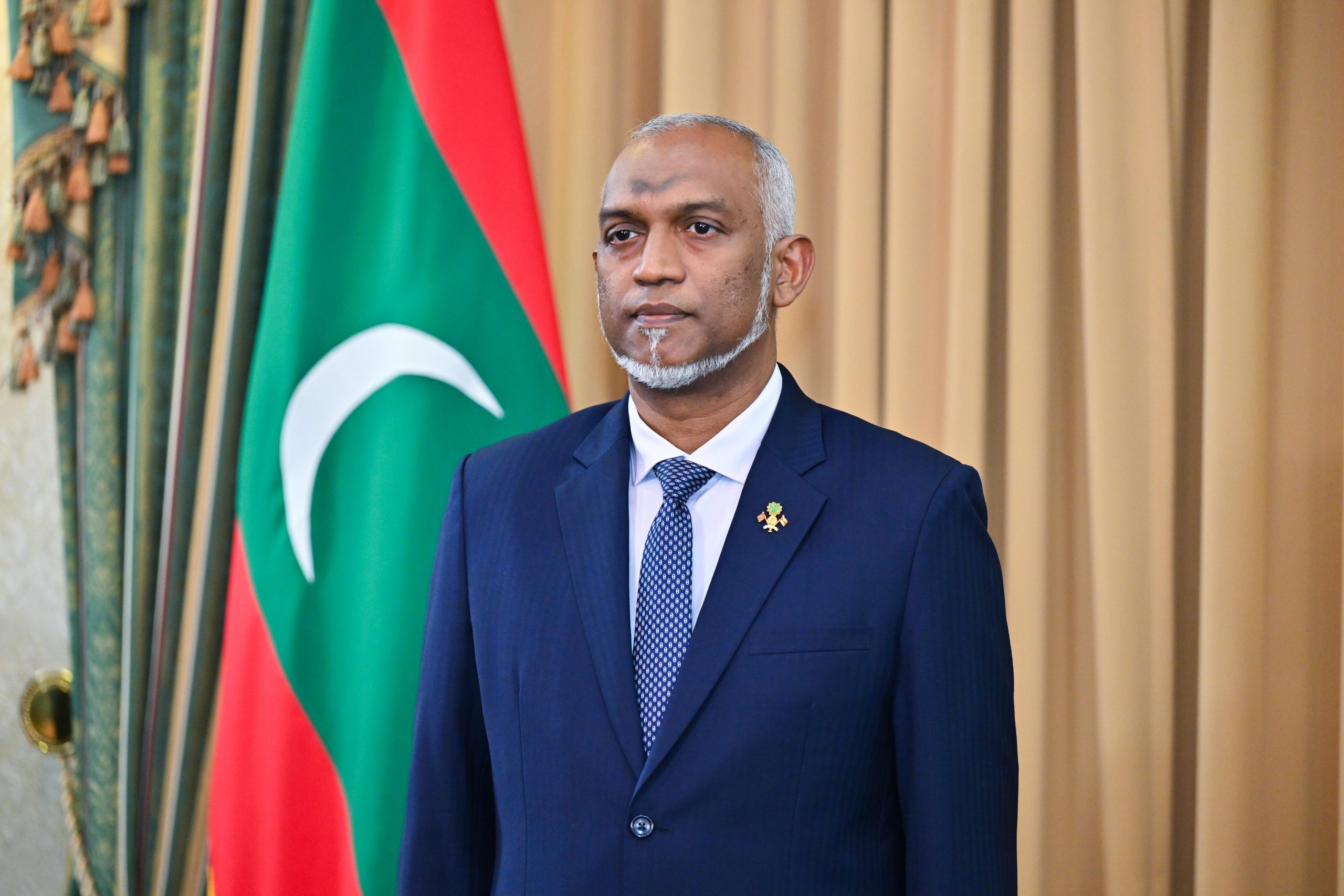
The findings of the APG report fall squarely within the tenure of President Mohamed Muizzu’s administration, which has now been in power for more than a year. Despite corruption and bribery being clearly identified as major threats, the government has failed to introduce a national strategy to tackle money laundering linked to corruption. No meaningful reforms have been made to strengthen oversight of state-owned enterprises, regulate the real estate sector, or tighten controls on politically exposed persons. Most critically, the Muizzu government has not put in place any effective system to recover stolen public money, allowing corrupt individuals to retain illicit wealth without consequence. The report makes clear that these are not inherited problems alone, but ongoing governance failures under the current administration.
Another major problem highlighted in the report is the real estate sector. Buying property is one of the easiest ways to hide illegal money, and the Maldives has weak controls in this area. Real estate agents are not properly regulated, and the government does not have a clear picture of the true value of property transactions. As a result, corrupt money is used to buy land, apartments, and buildings, making illegal wealth appear legal.
The report also points to illegal money changers and informal cash transfer systems, often known as hawala. Nearly one hundred suspicious reports were linked to these activities, yet authorities have taken little action. These systems allow large amounts of money to be moved without using banks, leaving no clear paper trail.
Perhaps the most serious failure identified in the report is the lack of asset recovery. The Maldives has almost never seized money obtained through corruption or money laundering. Only one such confiscation has ever been recorded, and even that was later overturned. There is no clear national plan to take back stolen assets, meaning corrupt individuals can keep their money even when wrongdoing is exposed.
The report makes it clear that corruption continues in the Maldives not because it is hidden, but because it is tolerated. Weak enforcement, political interference, and the failure to confiscate illegal wealth have created a system where corruption is low-risk and highly profitable.
Without strong action to hold powerful individuals accountable and recover stolen public money, the report warns that corruption will continue to harm ordinary Maldivians and undermine trust in the country’s institutions.