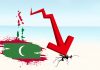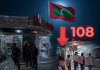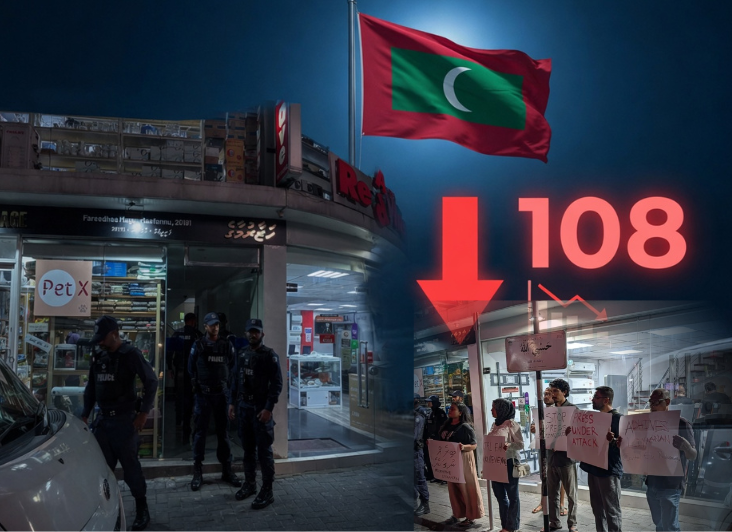
The Maldives, has fallen four places to 108th out of 180 in the 2026 World Press Freedom Index released by Reporters Without Borders (RSF). Its score has dropped from 52.46 to 49.23, pushing the Maldives further into the category of nations where journalism is practiced with great difficulty.
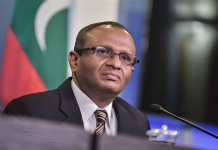
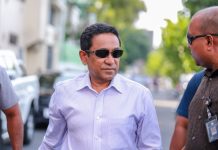
What began as lofty campaign promises of transparency and openness in 2023 has morphed into a calculated tightening of control over independent media and dissenting voices under President Mohamed Muizzu. Since he assumed office in November 2023, a disturbing pattern has taken root: direct presidential threats, draconian legislation, raids on newsrooms, bans on satire, and suppression of protest coverage.
The Media Control Bill:
The most decisive blow landed in September 2025 when Parliament rushed through the controversial Maldives Media and Broadcasting Regulation Act, which President Muizzu promptly ratified. The law scrapped self-regulatory bodies and established a new Maldives Media and Broadcasting Commission stacked with government influence.
Local and international critics including the Maldives Journalists Association (MJA), Committee to Protect Journalists (CPJ), International Federation of Journalists (IFJ), and democratic partners — slammed the legislation as “draconian law.” It arms the Commission with sweeping powers to fine journalists, suspend outlets, block websites, halt broadcasts, and probe content retroactively. Journalists who dared protest outside the President’s Office were met with arrests and police batons. While the government insists the law combats “fake news” and upholds Islamic values, the events that followed paint a far darker picture of state control.
Censoring Satire
In January 2026, the Commission issued its first major order under the new law forcing Adhadhu to remove and stop its popular “Siyaasee” political cartoon series. The cartoon, which satirised corruption and bribery in society, was deemed problematic — reportedly because it bore resemblance to the President. The Commission cited vague “Islamic principles” but offered scant legal explanation. Adhadhu’s regular cartoon segment was suspended indefinitely. When Dhauru republished the cartoon in its reporting, it promptly received an official warning and was ordered to take it down. The message was unmistakable: even satire is now considered dangerous.
The Aisha Documentary Raid: A New Low
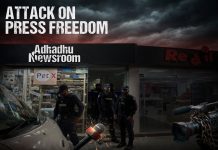
The most brazen assault on press freedom came on 27 April 2026. Police raided the offices of independent outlet Adhadhu month after it released the documentary Aisha, in which a former President’s Office employee made grave personal allegations against President Muizzu. Officers seized computers, devices, and reporting equipment during a prolonged search. Travel bans were slapped on Adhadhu CEO Hussain Fiyaz Moosa and Editor Hassan Mohamed, who now face criminal investigation and multiple charges.This was not the first time Adhadhu felt the heat. In March 2025, President Muizzu himself allegedly made a direct threatening phone call to CEO Fiyaz, warning of “harshest action” over critical coverage. The outlet filed a police complaint, but little came of it.The raid has drawn sharp international condemnation, with CPJ describing it as an attempt to “criminalise investigative journalism.
Silencing the Streets
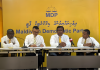
On 28 April 2026 just a day after the Adhadhu raid the Commission ordered Channel 13 to immediately stop live coverage of street protests organised by the People’s National Front (PNF). The directive, issued on technical pretexts, effectively blacked out real-time reporting of public dissent. This fits a wider pattern. In Sep 2025, several journalists were arrested while peacefully protesting the media bill. Repeated police crackdowns on Maldivian Democratic Party (MDP) rallies have also drawn accusations of excessive force and obstruction of journalistic work.
These incidents the Media Control Act, cartoon bans, presidential threats, newsroom raids, protest blackouts, and arrests have created a suffocating atmosphere. Independent journalists now work under constant threat of legal harassment, equipment seizure, funding cuts, and worse. Self-censorship is becoming the safest option. The political indicator in the RSF Index has deteriorated markedly,signalling deeper government interference in the media landscape.
President Muizzu and his administration continue to insist they champion media freedom and “responsible journalism.” Yet their actions speak louder: from personal phone threats to using state institutions against outlets that scrutinise power.
A free press is not optional it is the bedrock of accountability. When journalists fear raids and prosecution for doing their job, ordinary Maldivians lose their right to know the truth. The drop to 108th place must serve as a loud wake-up call. Reversing this decline demands urgent, concrete action: repealing or fundamentally reforming the Media Control Act, restoring genuine independence to regulatory bodies, ending intimidation of journalists, and protecting the right to satire, investigation, and protest coverage.
Independent journalism must be protected, not policed.