Maldives Airports Company Limited (MACL) has secured a USD 40 million syndicated loan from Sri Lankan banks to refinance part of the capital expenditure for the new international passenger terminal at Velana International Airport (VIA).
While officials describe the move as a refinancing arrangement, the decision comes as the Maldives faces one of its most severe external debt pressures — raising serious questions about sustainability and financial management.
According to Sri Lanka’s Daily Financial Times, the funds will be used to refinance costs related to the terminal that opened in July last year.
But the bigger issue is not the terminal itself — it is the pattern of repeated borrowing.
Borrowing to Repay Borrowing
The VIA terminal has been financed through multiple credit lines across successive administrations.
In 2016, during former President Abdulla Yameen Abdul Gayoom’s tenure, construction was contracted to the Saudi Binladin Group with approximately MVR 5.3 billion in financing from the Saudi Fund for Development (SFD).
Under former President Ibrahim Mohamed Solih, an additional MVR 386 million credit facility was secured to revise the terminal design and continue the project.
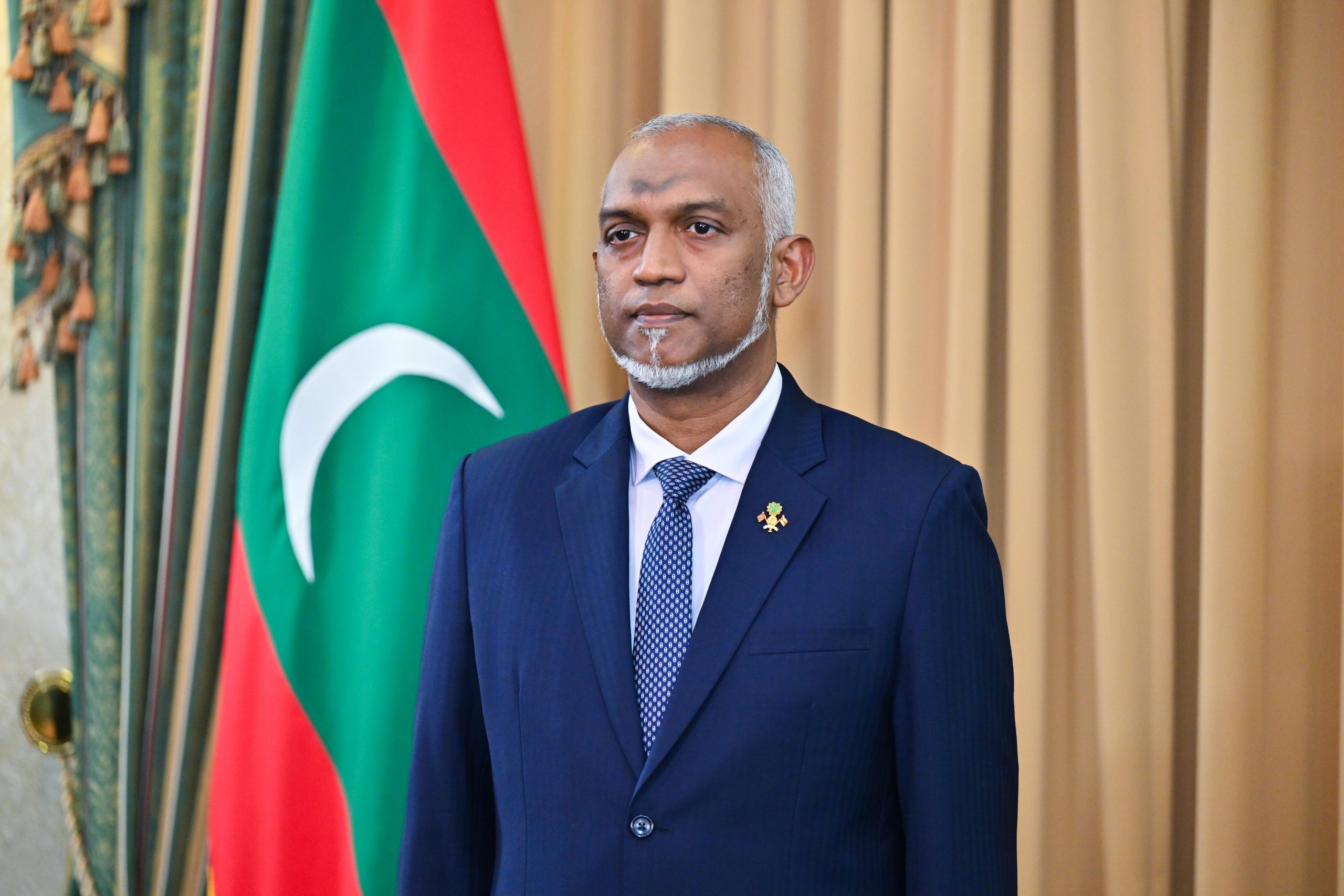
In 2023, shortly before assuming office, President Dr. Mohamed Muizzu secured another MVR 1.2 billion (USD 78 million) financing arrangement during a visit to Abu Dhabi.
The newly secured USD 40 million loan adds yet another external borrowing layer to an already heavily financed project.
This is no longer a single infrastructure investment it is a layered debt structure built on top of previous loans.
Debt Pressure at a Critical Time
The refinancing comes as the Maldives faces USD 1.1 billion in debt repayments this year, including a USD 500 million sovereign bond payment due in April.
Refinancing may ease short-term liquidity pressure for MACL, but it does not reduce the overall debt burden. Instead, it extends repayment obligations further into the future.
With these loans denominated in US dollars, repayment depends heavily on sustained tourism inflows and foreign currency availability — two areas where the economy remains vulnerable.
Every additional dollar-denominated loan increases pressure on foreign reserves. If reserves tighten, the consequences are felt locally through dollar shortages, rising import costs, and higher prices for essentials such as food, fuel and medicine.
Revenue vs. Repayment
A central question remains unanswered: Is the new terminal generating sufficient revenue to independently service its growing debt?
If revenue projections fall short — particularly during tourism downturns — repayment pressure could spill into broader public finances. When state-owned enterprises struggle with dollar repayments, the government often steps in, adding strain to national finances.
The refinancing also reflects a broader structural concern: major infrastructure projects continue to rely heavily on external borrowing rather than internally generated capital or phased development.
The new terminal may symbolize growth and ambition. But behind the glass façade lies a mounting repayment schedule that the country must confront.
For ordinary Maldivians, the concern is simple: When loans are taken to repay other loans, the bill does not vanish. It waits. And eventually, someone pays.