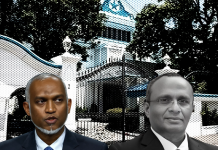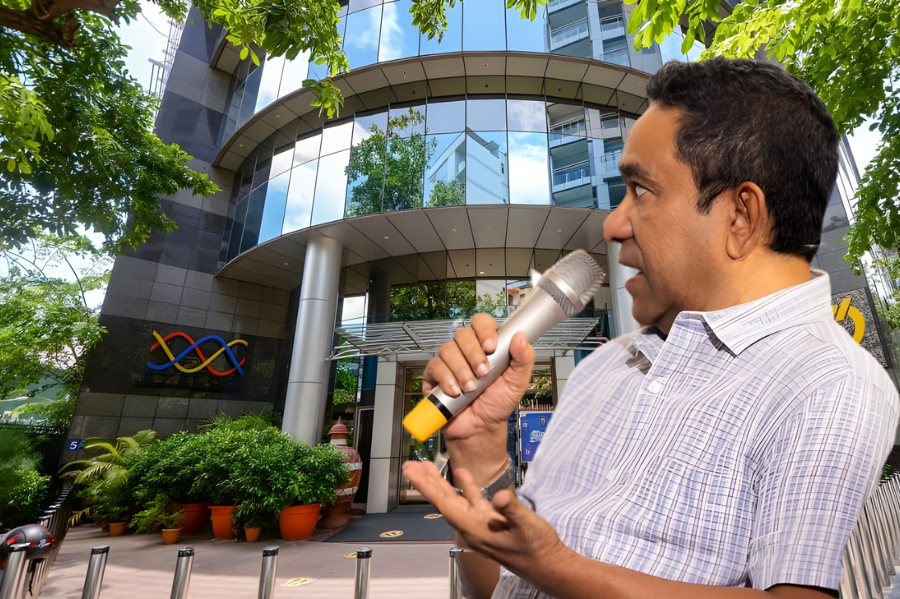
Former President Abdulla Yameen has warned that the State Electric Company (STELCO) could soon face a financial crisis, potentially leaving it unable to purchase fuel, if government agencies continue to default on payments.
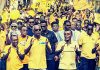
Speaking at a People’s National Front (PNF) rally Yameen highlighted that STELCO continues to supply electricity to ministries and state institutions even when bills remain unpaid. This, he said, has caused the company to accumulate mounting debts, putting its financial stability at serious risk.
Under the Right to Information Act, a media outlet had requested details of unpaid bills owed to STELCO by government agencies, independent institutions, and companies as of October 27 last year. STELCO, however, declined to disclose the information, citing potential harm to its business interests. At the same time, STELCO itself reportedly has significant unpaid bills to some companies, further adding to its financial strain.
Yameen criticized the secrecy surrounding these debts, arguing that it shields the public from understanding the true financial state of STELCO. He pointed out that the company is owed money not only by other state-owned enterprises but also by ministries and state institutions, reflecting the scale of the problem across the government sector.
“STELCO cannot cut off electricity anywhere here. It is reaching the point where it will not have the money to buy the fuel needed to run its turbines,” Yameen said.
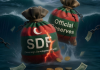
Despite the financial strain, government spending on state-owned companies remains high. According to official figures from the Ministry of Finance, the state budget had allocated MVR 1.7 billion to government-owned enterprises up to November 20, which is MVR 175 million higher than last year and MVR 1.3 billion above the MVR 378 million originally budgeted for this year.
Many of these state-owned enterprises continue to operate at a loss while carrying billions in debt, raising concerns about fiscal mismanagement. Audit reports have repeatedly flagged allegations of corruption and misuse of SOEs for political purposes. By the second quarter of last year, Finance Ministry data indicated that the total debt of government companies stood at MVR 54 billion, collectively employing around 36,000 staff, making them one of the largest employment bases in the country.
The Finance Ministry’s weekly fiscal update further highlighted the pressure on the state budget:
- Cumulative expenditure reached MVR 35 billion by November 20, driven largely by subsidies.
- Cumulative revenue and grants stood at MVR 33.5 billion, leaving an overall deficit of MVR 1.52 billion.
- Public Sector Investment Program (PSIP) spending fell to MVR 7 billion, compared to nearly MVR 9.6 billion in the same period last year.
The growing mismatch between budget allocations and actual spending on SOEs underscores the significant fiscal strain these companies impose on the government.
Yameen warned that the government would eventually have to “pump” funds into STELCO and other state-owned companies to keep them operational. He also accused President Dr. Mohamed Muizzu of draining liquidity from government enterprises, highlighting the disparity between households and state agencies: while ordinary citizens risk electricity disconnection if bills go unpaid, government agencies and some companies reportedly owe millions of rufiyaa without facing similar consequences.